Field Notes · Branding
Branding for Tech Startups: The Story of Telling Stories
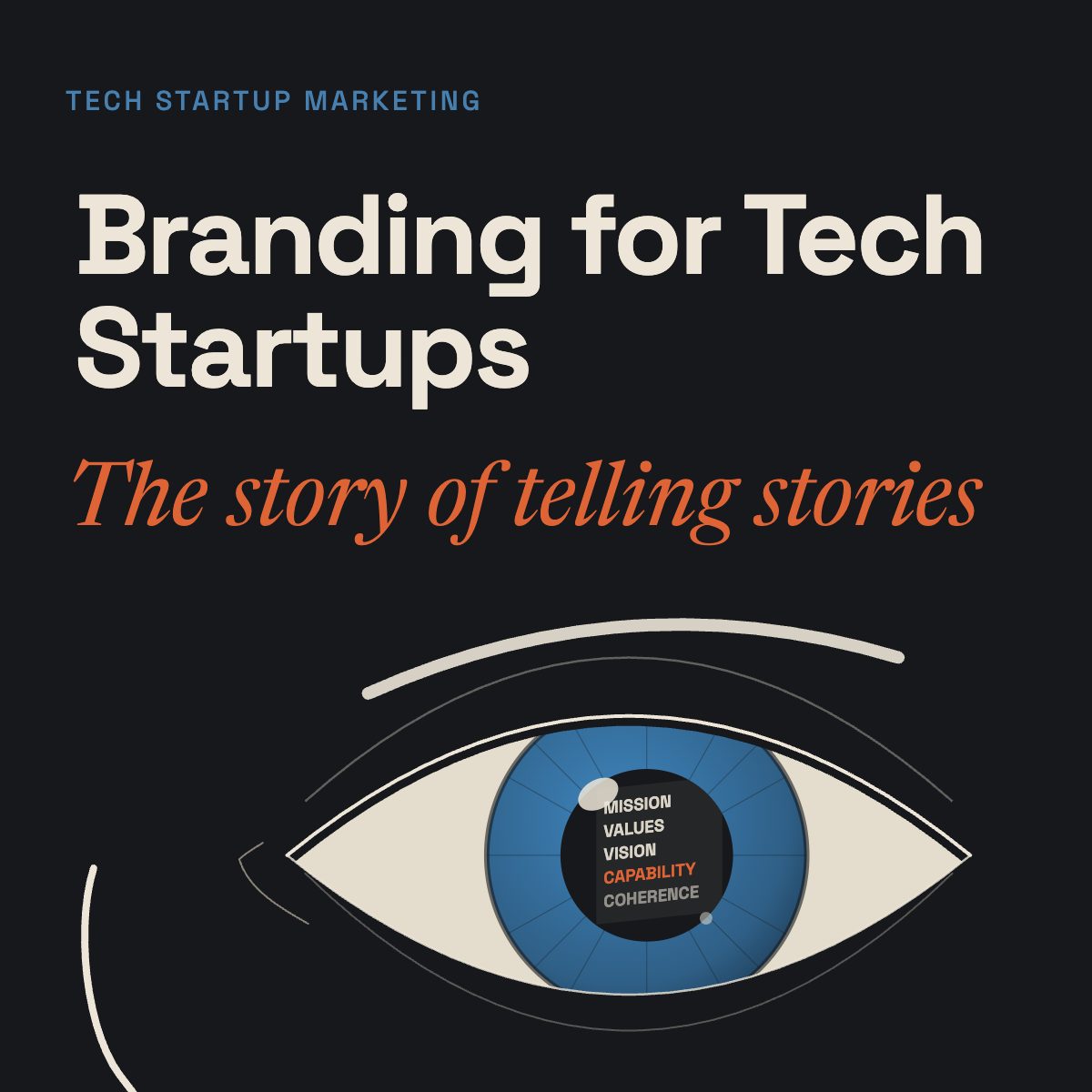
Branding shapes perception.
Much ink has been spilled over branding for consumer audiences. But what can a space startup developing a novel satellite payload take away from, say, Coca Cola’s iconic crimson-and-white visual design that conveys warmth, energy, and familiarity?
Apple is a household name with a branding story instructive, if not slightly overused, for tech startups. The company has built:
- A brand story with coherence of messaging and visual identity
- A distinctive narrative that extends beyond product to signal culture and vision - technology doesn’t have to be corporate or impersonal, but can serves as an extension of the human imagination
- A visual design that communicates this distinctively and memorably, and rooted in minimalism, strong silhouettes, and the classic monochrome partially-bitten apple logo
This story will look at why we tell stories and the power of communication.
Learn what branding for startups is, who its villains are, and how to structure a brand identity that withstands all the slings and arrows of outrageous fortune.
Why We Tell Stories: Communication Is Part of Commercialization
Communication is not complementary to commercialization; it is a requirement. It is the current that moves tech to market.
A coherent, clearly communicated brand identity makes complex technology and its commercial potential easier for audiences to understand, evaluate, and trust.
Comms is the plot device that moves a cast of characters along in your brand journey:
- An investor can quickly assess your product, smoothing the path for securing a funding round.
- Talent can glean the strength of your brand, and thereby your company.
- Government and defense stakeholders can more easily appreciate technical capabilities and their mission relevance.
- Strategic partners can better understand the benefits of collaborating with your company.
Additionally, branding sets up later marketing initiatives, making a go-to-market strategy that much easier to build and deploy.
What Is Branding? A Definition of Terms
Like any good narrative, we should understand the definition of key terms. This one is a bit nebulous and shifty since it's widely applied across company sizes and industry types, and AI is rapidly changing everything in marketing. Ask 10 people about branding and expect 10 different answers.
For tech startup purposes, branding constitutes:
- Brand strategy: mission, vision, values, positioning, differentiation, and character
- Brand identity: visual language, voice, messaging, and narrative
- Brand experience: how the identity comes together across touchpoints
This adage should go without saying, but due to the helter-skelter nature of tech startup life, it often gets ignored: strategy first, design and all else second.
Branding failure can, almost without exception, be traced back to the root cause of constructing brand identity based on assumptions and gut feelings rather than comprehensive strategy sessions with key stakeholders that leverage data points wherever possible. In other words, skip strategy or rush through it, and you’ll later be back at the beginning rebuilding identity at a higher cost.
Coherence Is the Hero
You’ve read this word a few times already for good reason. Coherence is the hero of your brand-building story.
Every visual and verbal element in a strong brand identity communicates a clear and consistent narrative.
Investors are in part evaluating startups on coherence. Your tech may be promising, but is the company coherent in direction, in purpose? Same goes for top talent you are recruiting, and potential partners and stakeholders you are soliciting. Branding doesn’t tell them you have sharp business acumen and sound judgement; it shows them that.
Second, coherence will drive brand distinction. Yours is not the only product aiming to solve a certain problem. Or if it is one of one, you might be up against conservative thinking - that’s the way we’ve always done it and it’s fine.
A distinct identity, which incorporates your culture and core tech capabilities, is what makes people remember you. It’s why they will talk about you. And, ultimately, it’s why they will choose you.
The Villains of Tech Startup Branding
Now to the villains in tech startup branding. Nearly all tech startups will face down:
- Talking about complex technology that’s years from commercialization
- An evolving product, applications and markets
- Diverse audience segments needing different information
- Limited commercial proof, incremental technical validation, and development milestones that shift
Brand strategy is the framework to handle each of these antagonists and more. It will provide coherence, while being agile enough to accommodate shifts in tech, priorities and the market.
Plot Twist: A Strong Brand That Can Evolve
Here are some familiar plot lines in a startup’s story:
Prototype testing doesn’t produce the desired results. A round of funding you knew was in the bag fell through.
Or...
A new market for your product is showing promising revenue potential. You’re building a product tangential to the original with a strategic partner to increase tech credibility and long-term funding.
The road to commercialization is bumpy. Sometimes progress is slowed to a halt and other times you hit a rough patch just right to catapult you further along.
A successful brand absorbs the impacts with these principles:
- Anchor the brand in what endures: Focus on the mission, values, vision, and core technical capabilities that remain relevant as products and markets evolve.
- Translate the foundation into a recognizable brand signature: Create a distinctive visual and verbal identity that expresses the foundational brand qualities without relying on generic tech clichés or specific products.
- Construct a compelling company narrative: Shape your audience’s perception through a narrative that connects the dots between culture and tech, between values and value propositions. Narratives are stories. They aren’t reports. More than listing milestones, narratives create the emotional resonance that elevates a brand, giving it dimension and making people care.
- Make the complex comprehensible without oversimplifying: You have the company narrative, and then you have your technical story. They overlap but have their own structures. The technology story centers on why the tech matters, what it enables, and the evidence supporting it. Sequencing deeper technical details and using visuals will help clarify complex concepts, while maintaining technical sophistication and accuracy.
How Do I Write My Own Story?
Back to the start of this story, let’s take a bite out of Apple.
Consider the tech juggernaut's branding example, and ask of your own company:
- What is the coherent and district aspects of your written and visual messaging?
- What is the core of your brand identity? Not the products, or even the outcomes. Think bigger. Apple is “Think Different.”A SaaS company for new energy may position themselves as partners in transitioning to clear power. A payload company may communicate its belief in expanding what's possible in orbit.
- Is your brand story a synthesis of culture and core tech wove into an authentic?
- How are visuals carrying your brand strategy? Visual storytelling is not tied directly to products and definitely not to trends. Who are you as a company at your most fundamental? Can someone look at your website and quickly glean cultural signals like mission and vision?
Answer these questions confidently and you have arrived at a happy ending. If you need help reaching your happily ever after, reach out. I love hearing stories and can help tell yours.